

Getting braces is exciting because you are working toward a straighter, healthier smile. But one thing many families do not think about right away is staining. Brackets and wires can make teeth harder to keep clean, which means plaque and discoloration can build up more easily during treatment. The good news is that with the right habits, you can keep your smile brighter throughout treatment and set yourself up for a better result when your braces come off.
Dr. Alvaro Salles, Dr. Adriana Salles, and the team at Topsmiles Pediatric Dentistry & Orthodontics help families understand how to care for teeth during treatment with braces in Winnipeg and other orthodontic options. Let’s look at what causes staining and how to help prevent it.
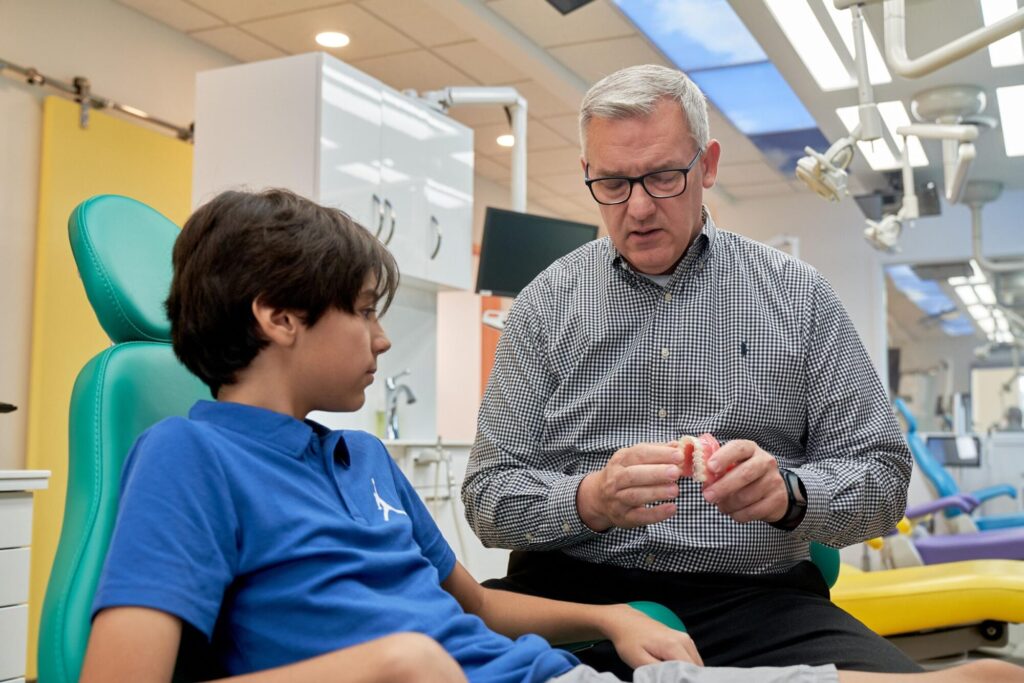
What Causes Teeth Stains While Wearing Braces?
Braces do not directly stain teeth. What happens instead is that brackets and wires create hard-to-reach areas where plaque can build up. Bacteria in that plaque produce acids that weaken enamel and can leave chalky white areas around brackets. At the same time, pigments from foods and drinks like coffee, tea, berries, and tomato sauce can collect more easily when plaque is left sitting on teeth.
Brackets, wires, and bands create small spaces where food particles can linger. When bacteria feed on sugars from food and drinks, acids are released against the enamel. That is why some patients notice white spot lesions or uneven discoloration after braces are removed.
White spots are not traditional stains. They are areas where enamel has lost minerals. Because of that, prevention matters much more than trying to correct the issue later.
Food and drink pigments can add another layer to the problem. If plaque is not removed thoroughly, darker pigments have more opportunity to settle near brackets and along the gumline.
That is why keeping plaque under control is the most important part of stain prevention during orthodontic treatment.
How Do You Prevent Stains While Wearing Braces? 5 Proven Tips
Keeping teeth cleaner during braces treatment usually comes down to a few consistent habits: brushing after meals, flossing daily, using fluoride products, limiting highly staining foods and drinks, and keeping up with professional cleanings.
Why Should You Brush After Every Meal?
Food particles begin feeding bacteria quickly after you eat. With braces, it helps to brush after meals whenever possible instead of waiting until bedtime. Use a soft-bristled toothbrush or orthodontic brush and angle it above and below the wire to clean around brackets. Many patients find it helpful to keep a travel toothbrush with them during the day.
If your family is exploring treatment, this is also one reason why patients compare braces with clear aligners in Winnipeg before getting started.
How Does Fluoride Mouthwash Protect Your Enamel?
Fluoride helps strengthen enamel and can reduce the risk of white spot lesions. Rinsing with a fluoride mouthwash after brushing, especially at night, can help support enamel in areas your toothbrush may miss.
Why Is Daily Flossing So Important With Braces?
Flossing with braces takes more effort, but it helps remove plaque and food particles from between teeth where staining and decay often start. Orthodontic flossers, floss threaders, and water flossers can all help make this easier for families trying to stay consistent.
What Foods and Drinks Should You Limit?
Some foods and drinks are more likely to leave stains behind. Coffee, tea, dark sodas, tomato sauce, curry, soy sauce, and berries are common examples. You do not have to avoid them completely, but it helps to rinse with water after having them and brush when you can.
How Often Should You Get Professional Cleanings During Braces?
Regular cleanings become even more important during orthodontic treatment. Professional cleanings remove hardened plaque that brushing cannot remove at home. They also help your dental team spot early signs of buildup or enamel changes before they become more noticeable.
Families already seeing the team for pediatric and orthodontic care can use these visits to stay ahead of problems while moving through treatment with Winnipeg orthodontics.

Why Preventing Stains Now Pays Off Later
Taking care of your teeth during treatment can make a big difference in how your smile looks when braces come off and how healthy your teeth stay long term.
How Does Prevention Protect Your Smile on Removal Day?
No one wants to finish treatment and see uneven discoloration around the places where brackets used to sit. Consistent brushing, flossing, and professional cleanings help support a cleaner, healthier smile when braces are removed.
These same habits also help reduce the risk of decay and gum inflammation during treatment.
Can Good Habits During Braces Save You Money?
Prevention is usually much less expensive than correcting problems after treatment. Whitening, bonding, or other cosmetic procedures can become necessary when staining or white spot lesions are more noticeable than expected. Investing in good habits early is almost always the better path.
Stain Prevention: Metal Braces vs. Clear Braces vs. Clear Aligners
Your treatment type can affect how easy it is to keep teeth clean. Topsmiles offers multiple treatment options, including braces and Winnipeg clear aligners.
| Factor | Metal Braces | Clear Braces | Clear Aligners |
|---|---|---|---|
| Stain Risk | Higher | Moderate | Lower |
| Bracket Visibility | Most visible | Tooth-colored brackets blend in more | No brackets |
| Cleaning Difficulty | More challenging | More challenging | Easier because they are removable |
| Ligature Concerns | Elastic ties can discolor | Clear ties may yellow | None |
| Maintenance Level | High | High | Moderate |
Metal braces usually create the most plaque-retentive areas because they are fixed in place. Clear braces may look subtler, but they still require the same level of daily cleaning. Clear aligners are removable, which can make oral hygiene easier for many patients when used properly.
If you are trying to decide which option is best for your family, a free ortho consult can help you compare the pros and cons based on lifestyle, age, and smile goals.
What Does It Cost to Fix or Prevent Braces Stains?
Preventing braces stains usually costs much less than correcting them later. Basic prevention tools like a good toothbrush, fluoride rinse, floss threaders, or a water flosser are generally affordable compared with whitening or cosmetic repair after treatment.
Professional cleanings during treatment are also an important part of prevention and may be covered by dental insurance depending on your plan.
Who Is Most at Risk for Braces Stains?
Some patients have a higher risk of staining or white spot lesions during treatment, especially if they:
- Are kids or teens who still need help building strong brushing habits
- Drink soda, juice, or sports drinks often
- Snack frequently without brushing afterward
- Have a history of cavities or weaker enamel
- Wear fixed braces instead of removable aligners
Kids often need more reminders and supervision than parents expect. For families balancing orthodontics and pediatric dental care together, building these habits early makes a major difference over the course of treatment.
If any of these risk factors sound familiar, the team can help you build a better routine during regular visits with your Winnipeg orthodontist.

Frequently Asked Questions About Braces and Teeth Stains
Can you fix stained teeth after braces are removed?
Yes, but the right option depends on the type and severity of the discoloration. Surface stains may respond to whitening, while white spot lesions may need different professional treatment approaches.
Do white spots from braces go away on their own?
Mild white spots may improve somewhat over time, but more noticeable areas often need professional evaluation. Prevention is much easier than correction.
How often should you brush your teeth with braces?
Brush after meals and snacks whenever possible. If you cannot brush right away, rinse with water until you can.
Is whitening safe while wearing braces?
Most patients are advised to wait until braces are removed because whitening products do not reach the enamel under brackets evenly.
What foods should you avoid to prevent staining with braces?
Try to limit deeply pigmented and acidic items like coffee, tea, dark sodas, tomato sauce, curry, and berries. Rinsing with water after these foods can help.
If you want to explore treatment options for straighter teeth while keeping oral health front and center, visit our Winnipeg Orthodontist page, learn more about Braces Winnipeg, or schedule a free ortho consult.