
Winnipeg Orthodontist: Braces and Clear Aligners for Every Age
What Does a Winnipeg Orthodontist Do?
A Winnipeg orthodontist is a dental specialist who diagnoses, prevents, and corrects misaligned teeth and improper bites. Using braces, clear aligners, and growth-guiding appliances, an orthodontist moves teeth and jaws into healthier positions for kids, teens, and adults, improving both how a smile looks and how it works.
That's the short answer on orthodontist meaning. The longer version is a little more interesting.
Every orthodontist starts as a dentist, then completes several additional years of accredited specialty training focused entirely on tooth movement, jaw growth, and bite correction. A general dentist handles cleanings, fillings, and everyday oral health. An orthodontist spends the day doing one thing: straightening smiles and fixing bites.
At Topsmiles Pediatric Dentistry & Orthodontics, we handle both. Dr. Alvaro Salles is our board-certified orthodontist, and Dr. Adriana Salles is our pediatric dentist, so your family's checkups, cleanings, and smile transformation all happen under one roof in Winnipeg.
Issues an Orthodontist Treats
- Crowding, when there isn't enough room for teeth to line up properly
- Gaps and spacing between teeth
- Overbite, where upper front teeth sit too far over the lower teeth
- Underbite, where the lower jaw sits ahead of the upper jaw
- Crossbite, where upper and lower teeth don't meet correctly side to side
- Open bite, where front teeth don't touch when the back teeth close
- Impacted or erupting teeth that need guidance into position
Misaligned teeth aren't only a cosmetic concern. They can lead to speech difficulty, food getting trapped, bad breath, uneven wear, and early loss of teeth.
We see kids, teens, and adults at our Winnipeg office, and your first step costs nothing. Book a free ortho consult with our team, or send photos through our virtual consult tool if you'd like a quick first opinion before coming in.

Orthodontic Treatment Options at Our Winnipeg Practice
Four main paths cover almost every case we see. Your orthodontist matches the option to your bite, your age, and how much correction is needed.
1. Metal braces. Stainless steel brackets bonded to each tooth, connected by an archwire that applies steady, gentle pressure. This is our tried & true treatment for complex crowding, rotations, and bite correction. Kids love picking new colour bands at each visit.
2. Clear braces. Same mechanics as metal, but with tooth-coloured ceramic brackets that blend into your natural smile. Ideal for teens and adults who want full bracket correction without the shine.
3. Clear aligners. A series of custom-made, nearly invisible trays that shift teeth a little at a time. Best for mild to moderate crowding, spacing, and relapse after previous treatment. Removable for meals and brushing.
4. Early interceptive care. For growing kids, we use space maintainers, expanders, partial braces, and habit appliances to guide jaw development before all the permanent teeth arrive.
How We Match Treatment to Your Case
The recommendation usually comes down to how complex the case is. A mild relapse after retainers is very different from a deep overbite with significant crowding.
At your free ortho consult, Dr. Alvaro Salles reviews your digital scans, photos, and X-rays, then explains what each option would realistically accomplish for your bite. Some cases work equally well with braces or aligners. Others clearly favour one.
Here's what we weigh:
- How much the teeth need to rotate, tip, or move vertically
- Whether the jaws need growth guidance or bite correction
- Age and remaining growth
- How consistently trays would be worn, since aligners only work when they're in
- Your goals for appearance during treatment
Everything happens at one Winnipeg location, so you're not driving across the city for records at one office and adjustments at another. Families from St. Vital, St. Boniface, Kildonan, and neighbourhoods across Winnipeg come to us for exactly that reason.
Metal and Clear Braces: How They Work
How Do Braces Move Teeth?
Braces move teeth with light, continuous pressure. Brackets bonded to each tooth hold an archwire, and as that wire works back toward its original shape, it guides the teeth along with it. Bone rebuilds around each root as the tooth shifts, so movement happens over months in small, controlled steps.
Three parts do the work together.
- Brackets are bonded to each tooth with a special adhesive
- Archwires thread through the brackets and apply the force that guides movement
- Elastics hold wires in place or connect the upper and lower arches to correct the bite
Elastics add the extra direction we need when the upper and lower arches don't line up, and the wire changes we make along the way keep everything moving on plan. Because bone needs time to remodel around each root, we work through the correction in stages rather than rushing it.
Metal Braces
Modern metal braces are smaller, smoother, and more comfortable than the ones you remember. Our self-ligating brackets hold the wire without elastic ties, which means fewer adjustments and a faster, easier process overall.
They're the strongest option for complicated rotations, significant crowding, and bite correction. They also don't depend on anyone remembering to wear anything, which makes them a reliable choice for younger kids and busy teens. Colour bands are a bonus. Your kids have it much easier than we did.
Clear Braces
Clear braces use tooth-coloured ceramic brackets that blend with your enamel. You get the same bracket-and-wire correction with a much lower profile.
Teens heading into graduation photos and adults in client-facing jobs tend to gravitate here. Clear brackets stay bonded and working around the clock, so you get the same bite correction as metal without the flash of hardware in every photo. For many families weighing appearance against results, the choice is clear.
Adjustment Visits and Daily Care
Plan on a short adjustment visit roughly every 6 to 8 weeks. We change the wire, check progress, and make small corrections along the way.
A few care tips that really help:
- Skip hard foods like ice, nuts, and hard candy
- Avoid sticky items such as caramel, taffy, and gum
- Cut apples, carrots, and corn off the cob into smaller pieces
- Brush after meals, angling the bristles above and below each bracket
- Use floss threaders or a water flosser once a day
- Wear a mouthguard for hockey, basketball, and other contact sports
Call us right away if a bracket comes loose or a wire starts poking. Most of these are quick fixes.
Clear Aligners in Winnipeg: Is Invisible Treatment Right for You?
Clear aligners are custom-made, nearly invisible trays that fit over your teeth and shift them gradually. You wear each set 20 to 22 hours a day and switch to the next set on the schedule we set for you. Each tray differs slightly from the last, moving teeth a small step at a time.
At Topsmiles Pediatric Dentistry & Orthodontics, we offer both Invisalign and our own in-house clear aligners.
Who Aligners Suit Best
- Mild to moderate crowding
- Spacing and small gaps
- Relapse after previous braces, especially when retainers stopped being worn
- Adults who want discretion at work
- Responsible teens who won't leave trays in a lunch bag
The Benefits Families Mention Most
- Removable for meals, so there are no food restrictions
- Easier hygiene, since you brush and floss normally
- Fewer emergency visits, because there are no brackets or wires to break
- Comfortable, smooth plastic with no metal edges
- Nearly invisible in photos and conversation
The One Catch
It all comes down to wear time. Aligners sitting on a nightstand don't move teeth.
Twenty to twenty-two hours a day is the standard, which realistically means trays come out for meals and brushing and go straight back in. For teens, we set expectations early and use wear indicators to track progress. Parents appreciate knowing where things stand at each visit.
What Happens at the Consult
We take digital scans instead of the old putty trays, so the whole step is quick and easy. From those scans, we build a 3D treatment plan and show you a preview of the projected result before you commit to anything.
Seeing the "after" first makes the decision a lot easier. Ask about it at your free ortho consult in Winnipeg.
Orthodontics for Kids, Teens and Adults
The goal stays the same at every age, but the strategy changes. Here's how care typically unfolds at each stage.
Kids: First Check by Age 7
The Canadian Association of Orthodontists and the American Association of Orthodontists both recommend a first orthodontic evaluation by age 7. By then, enough permanent teeth have come in for us to spot crossbites, crowding, and jaw growth concerns early.
An early check rarely means early braces. Often we simply monitor growth and schedule the right moment to begin.
Phase 1 Interceptive Care
When treatment is needed early, it's usually targeted and short. Phase 1 care can:
- Widen a narrow upper jaw with an expander
- Create room for permanent teeth that are still coming in
- Correct a crossbite before it affects jaw growth
- Reduce the risk of injury to front teeth that stick out
- Address thumb-sucking or tongue-thrust habits
Teens: The Most Common Window
Once the permanent teeth are in, the bite can be corrected in full. Growth is still on our side during these years, which often makes correction more efficient. Metal braces, clear braces, and clear aligners are all on the table.
Adults: Never Too Late
Adults come to us for appearance, for bite function, and sometimes because a general dentist recommended alignment before crowns, bridges, or implants. Relapse is another common reason, since teeth drift when retainers stop being worn.
Bone responds to gentle pressure at any age. Treatment may take a little longer for adults, but the results hold just as well with consistent retainer wear.
One Practice, From Birth to Braces
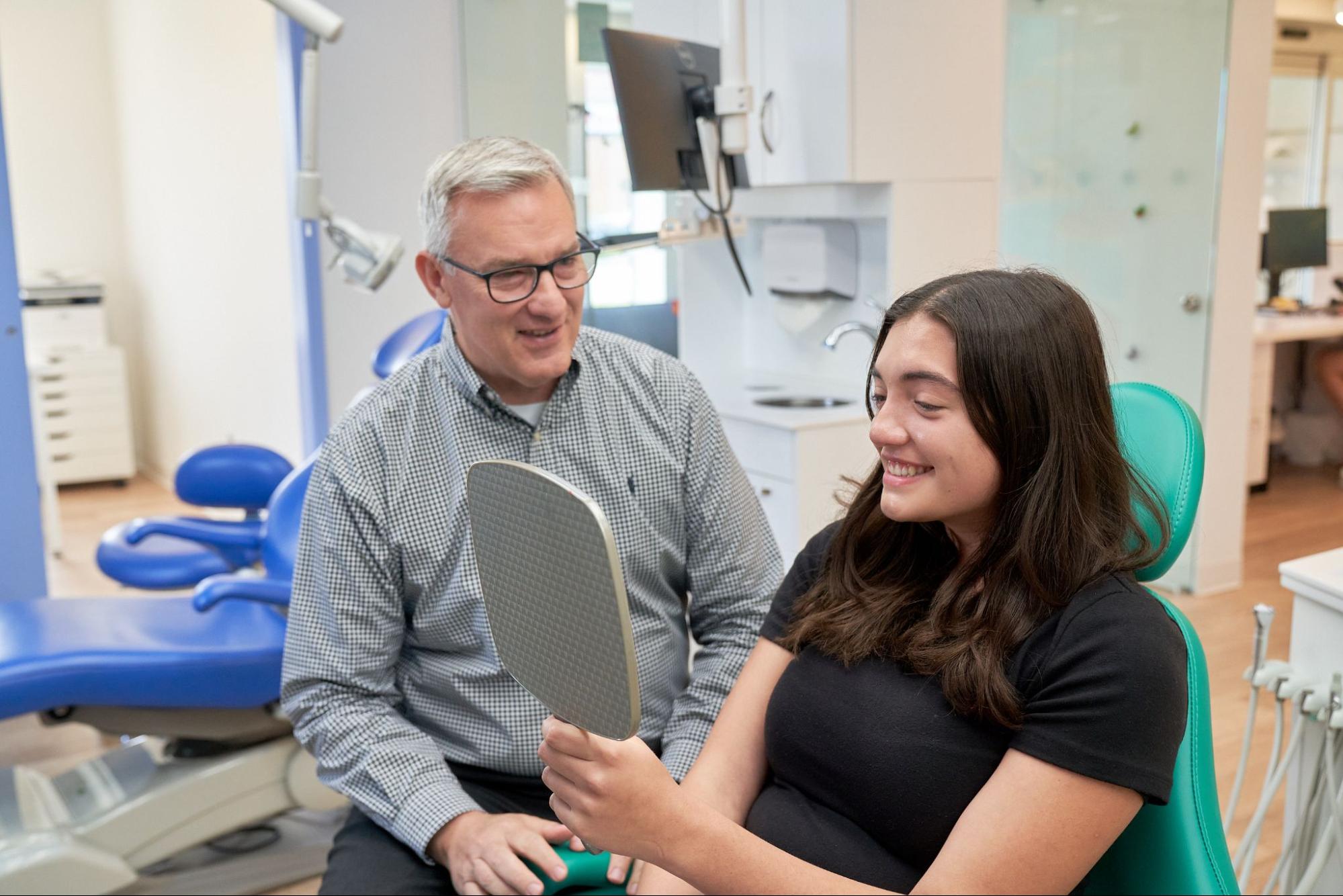
Because Topsmiles Pediatric Dentistry & Orthodontics is a dual-specialty office, your family's cleanings, checkups, and smile transformation all happen in the same place with the same team. Dr. Alvaro Salles and Dr. Adriana Salles plan together and share one set of records instead of sending your family across town.
From birth to braces, we know your child's smile.
What to Expect: From Free Consult to Retainer
Orthodontic care at our Winnipeg office follows four steps:
- A free ortho consult, where we examine the teeth and bite and talk through your options.
- A records visit, with digital scans, photos, and X-rays that we use to build your plan.
- Appliance placement, followed by regular adjustment visits as the teeth move.
- Removal of braces or your final aligner tray, then retainers that hold your new smile in place.
Step 1: Your Free Ortho Consult
You'll meet our team, we'll examine the teeth and bite, and we'll answer the questions you came in with. No cost, no obligation. Out-of-town or short on time? Submit photos through our virtual consult and we'll send back a first opinion.
Step 2: Records and Diagnosis
We take digital scans, photos, and X-rays. From these, Dr. Alvaro Salles builds a 3D treatment plan showing exactly how the teeth will move and roughly how long it will take. You'll see the plan and next steps before anything begins.
Step 3: Placement and Adjustments
Bonding braces usually takes one to two hours. We clean and dry the teeth, apply adhesive, position each bracket, then thread the archwire.
Aligner starts are quicker. We check the fit of tray one, place any small attachments, and review the wear schedule with you.
After that, expect short progress visits every 6 to 8 weeks for braces, and roughly every 8 to 10 weeks for aligners. Teeth feel tender for a day or two after each change, and over-the-counter relief plus soft foods handles it easily.
Step 4: Retainers
When the last movement is finished, we remove the brackets or you finish your final tray. Then comes the part people underestimate: retainers.
Teeth have memory and will drift without support. Wear your retainer exactly as directed and your teeth stay where we moved them. Consistent retainer wear is the difference between a bite that holds its finished position and one that slowly shifts back over the years, so we'll walk you through the wear schedule and the cleaning routine before you leave.
How Long Does It Take?
- Simple cases: often 6 to 12 months
- Moderate cases: typically 12 to 18 months
- Complex bite correction: commonly 18 to 30 months
Timelines depend on the starting bite, your age, and how consistently you wear elastics or aligners.
If Something Breaks
Loose brackets, poking wires, and lost aligners happen. Call our Winnipeg office at 431-317-7777 and we'll get you in. Until you can be seen, orthodontic wax over a rough spot is a good temporary fix.
Braces vs. Clear Aligners: Side-by-Side Comparison
| Metal Braces | Clear Braces | Clear Aligners | |
|---|---|---|---|
| Appearance | Visible metal with colour band options | Tooth-coloured, subtle | Nearly invisible |
| Removable | No, fixed until removal | No, fixed until removal | Yes, for meals and brushing |
| Case complexity | Handles mild to complex, including major bite correction | Mild to complex | Mild to moderate, some moderate-plus with attachments |
| Hygiene | Requires threaders or a water flosser | Requires threaders or a water flosser | Brush and floss normally |
| Visit frequency | Every 6 to 8 weeks | Every 6 to 8 weeks | Roughly every 8 to 10 weeks |
| Typical duration | 12 to 30 months | 12 to 30 months | 6 to 18 months for most cases |
| Depends on compliance | Minimal, aside from elastics | Minimal, aside from elastics | High, wear time drives results |
Choosing Between Them
Pick metal braces when the bite needs significant correction, when teeth require major rotation, or when remembering to wear trays would be a struggle.
Pick clear aligners for mild to moderate crowding or spacing, especially as an adult who'd rather not show hardware at work.
Pick clear braces when you want bracket-level correction with a softer look.
Frequently Asked Questions About Orthodontics in Winnipeg
What is the difference between an orthodontist and a dentist?
Both complete dental school, but an orthodontist finishes several additional years of accredited specialty training in tooth movement, jaw growth, and bite correction. A general dentist manages everyday oral health such as cleanings, fillings, and crowns. An orthodontist focuses on straightening smiles with braces, clear aligners, and growth-guiding appliances.
How long does orthodontic treatment take?
Most cases finish somewhere between 12 and 24 months. Simple alignment or minor relapse can wrap up in 6 to 12 months, while complex bite correction may run 18 to 30 months. Wearing elastics and aligners exactly as directed is the single biggest factor in staying on schedule.
Do braces hurt?
Getting braces put on doesn't hurt. Teeth usually feel sore or tender for a couple of days afterward and again for a day after each adjustment, which is simply the feeling of them beginning to move. Soft foods, cold water, and over-the-counter relief handle it well, and orthodontic wax smooths any spot that rubs.
At what age should my child see an orthodontist?
By age 7, according to both the Canadian Association of Orthodontists and the American Association of Orthodontists. Enough permanent teeth have erupted at that point to reveal crowding, crossbites, and jaw growth concerns. Most kids who come in at 7 simply get monitored, and we start treatment at the ideal moment rather than too early.
Can I get orthodontic treatment as an adult?
Absolutely. Healthy bone responds to gentle pressure at any age, and adults make up a meaningful share of orthodontic care today. Clear aligners and clear braces are popular with adults who want discretion, while metal braces remain the strongest option for complex bites. The main requirement is healthy teeth and gums before starting.
Orthodontic Resources and Care Guides
Good information makes treatment easier. Our team keeps guides on hand for the questions families ask most:
- Braces care: foods to avoid, brushing and flossing around brackets, and mouthguard use for sports, covered in detail on our metal braces and clear braces pages
- Clear aligner wear: tray schedules, cleaning your aligners, and what to do if one goes missing, outlined on our clear aligners page
- Early and interceptive care: expanders, space maintainers, and habit appliances, explained alongside our kids dentistry services
- Retainers: how long to wear them, how to clean them, and what to do if one cracks
- Orthodontic emergencies: loose brackets, poking wires, and when to call us right away
For clinical guidance on timing, both the Canadian Association of Orthodontists and the American Association of Orthodontists recommend a first orthodontic check by age 7. That single visit helps us catch developing bite issues while jaw growth is still on our side.
Virtual consult. Busy schedule, or driving in from outside Winnipeg? Send us photos of your smile through our virtual consult tool and we'll share a first opinion on whether braces or clear aligners make sense, along with a rough sense of timing.
Book Your Free Orthodontic Consultation in Winnipeg
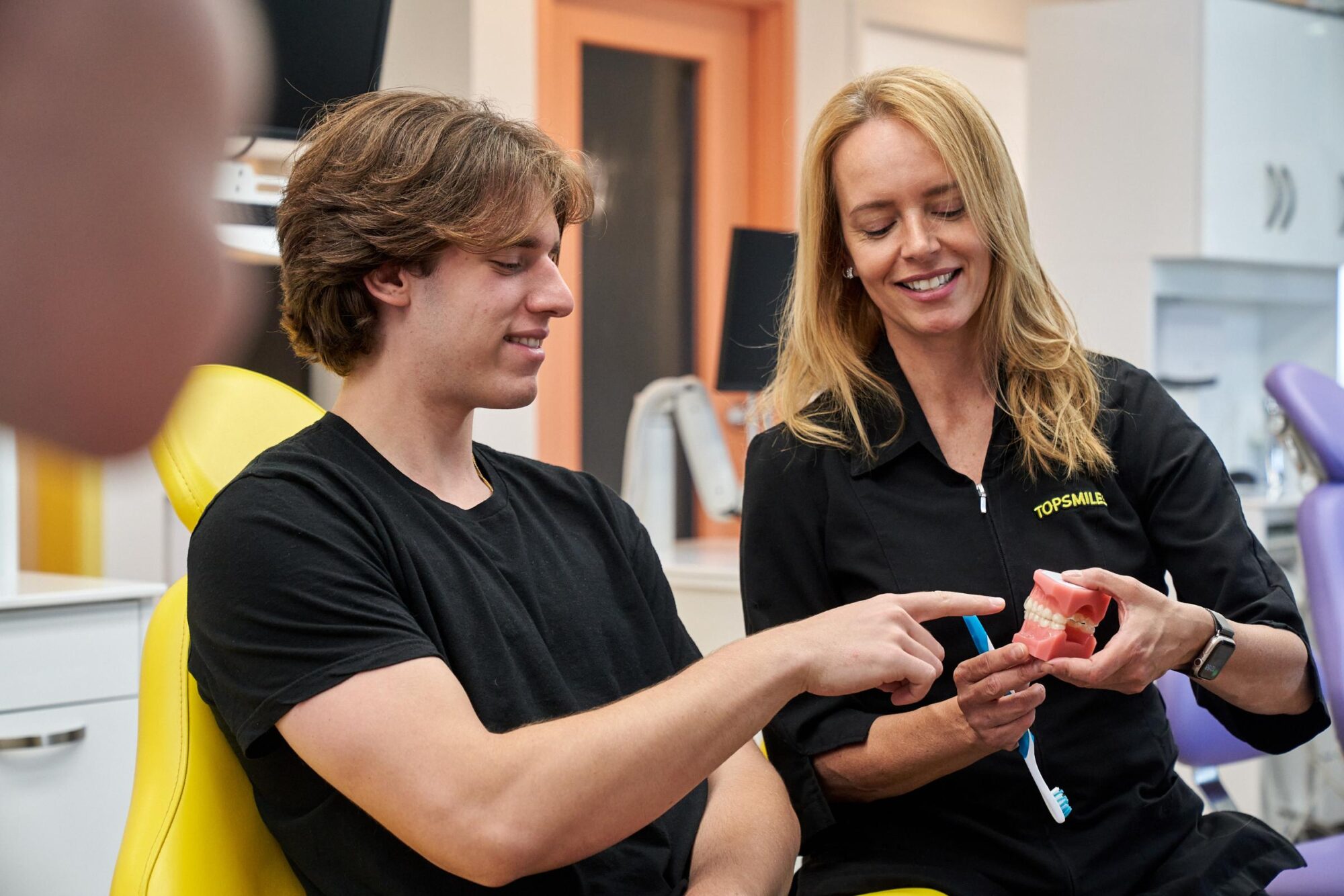
Ready to discover your top smile? Book a free ortho consult with Dr. Alvaro Salles and the team at Topsmiles Pediatric Dentistry & Orthodontics. There's no cost and no pressure, just a clear look at your bite and honest answers about your options.
Prefer to start from your couch? Send photos through our virtual consult and we'll give you a first opinion before you ever step in the door.
Families searching for the best orthodontist in Winnipeg, or simply an orthodontist near me, usually want the same two things: straight answers and one convenient office for everyone at home. Kids, teens, and adults can be seen in the same visit block, so one trip can cover the whole household. That's the advantage of a dual-specialty office where kids dentistry and orthodontics share the same roof, with both doctors reviewing your family's records together.
Our Winnipeg office welcomes new families at 246 St. Anne's Rd., Winnipeg, MB R2M 3A4, with free parking and visits scheduled around school and work hours whenever we can.
Call 431-317-7777 or request a visit online. Our family can't wait to meet yours.