

Invisalign vs in-house clear aligners comes down to who makes the trays and who manages them. Invisalign is a brand-name system made by Align Technology. In-house aligners are designed and printed in the orthodontic office from your digital scan. Both are removable, nearly invisible, and move teeth in small steps.
Choosing between them can feel like a big decision. It is usually simpler than it looks. This guide compares Invisalign vs in-house clear aligners, shows how treatment works with each, and explains how your orthodontist decides which one fits your teeth. Topsmiles Pediatric Dentistry & Orthodontics offers both, so you can weigh them with the doctor who would treat you.
What Is the Difference Between Invisalign and In-House Clear Aligners?
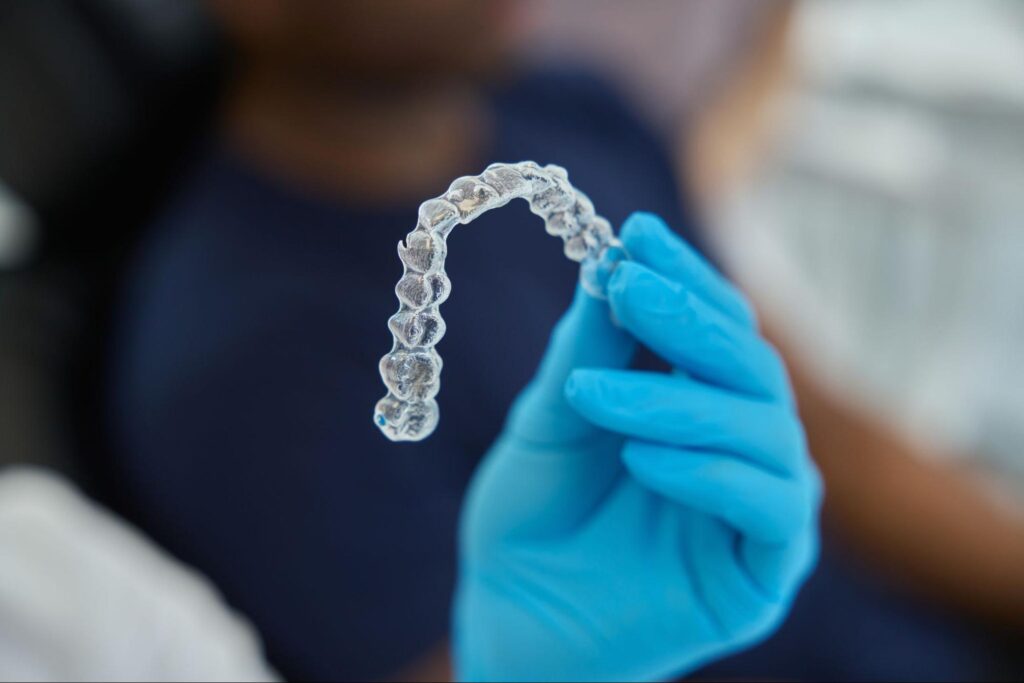
The main difference is the source. Invisalign aligners are made by the brand’s manufacturer, Align Technology. In-house clear aligners are designed and 3D printed at the orthodontic office. The trays look and work alike: both start with a digital scan, both are removable, and both finish with retainers.
Invisalign is a household name. Many people have heard of it long before they sit in an orthodontist’s chair. In-house aligners are less familiar, though the idea behind them is the same.
Topsmiles Pediatric Dentistry & Orthodontics prints its own aligners. The team scans your teeth, builds your treatment plan, and prints each set in the office. That same team monitors every fitting and adjustment.
How Do Invisalign and In-House Aligners Compare Side by Side?
The table below puts the two options next to each other. Most rows match, which surprises many people.
| Feature | Invisalign | In-house clear aligners |
|---|---|---|
| Who makes the trays | Align Technology, the brand’s manufacturer | The orthodontic office, using 3D printing |
| How treatment starts | Digital scan and a 3D treatment plan | Digital scan and a 3D treatment plan |
| Appearance | Clear plastic, nearly invisible | Clear plastic, nearly invisible |
| Removable | Yes, for meals, brushing, and flossing | Yes, for meals, brushing, and flossing |
| Daily wear | At least 22 hours a day | At least 22 hours a day |
| Tray changes | Every one to two weeks | Every one to two weeks |
| Check-ups | Typically every six to eight weeks | Typically every six to eight weeks |
| Best suited for | Mild to moderate alignment concerns | Mild to moderate alignment concerns |
Brand name and tray production are the real differences. Everything else depends on your teeth and how consistently you wear the trays.
How Does Treatment Work With Each Option, Step by Step?
Treatment steps are nearly identical. Only step four changes depending on the option you choose.
- Exam and consult. Your orthodontist examines your teeth and bite and talks through your goals.
- Digital scan. A small wand captures your teeth on screen, so there are no putty impressions.
- 3D treatment plan. Your orthodontist builds a plan that maps how your teeth are expected to move.
- Tray production. Invisalign trays are made by the manufacturer. In-house trays are 3D printed at the orthodontic office.
- Wear and swap. You wear each set at least 22 hours a day and switch to the next set every one to two weeks.
- Check-ups. Your orthodontist checks your progress and hands you new sets, typically every six to eight weeks.
- Retainers. Once your teeth reach their new positions, retainers keep them there.
Wear time matters more than brand. Trays that stay in a case do not move teeth, no matter who made them.
What Are the Benefits of Each Option?
Both options share what people like about clear aligners: comfort, removability, and a discreet look. When you weigh Invisalign vs in-house clear aligners, these are the points that set each one apart.
What Are the Benefits of Invisalign?
Invisalign is a recognized brand, so many patients feel reassured by the name. It also comes in a version for younger patients. Invisalign First is designed for children with growing mouths, and Topsmiles offers it for kids who may benefit from early treatment.
What Are the Benefits of In-House Clear Aligners?
In-house aligners keep the whole process under one roof. Your scan, your plan, and your printed trays all come from the same office. That means questions about fit go straight to the team that made the tray.
How Does Your Orthodontist Decide Which Aligner Is Right for You?
The decision starts with your teeth, not the logo on the tray. Your orthodontist looks at several things before recommending an option:
- How much your teeth need to move, including crowding, spacing, and rotation
- How your upper and lower teeth fit together
- Your age and stage of growth
- Existing dental work, such as crowns or bridges
- How realistically you can wear trays 22 hours a day
- Your own goals and preferences
That conversation happens with Dr. Alvaro Salles at Topsmiles Pediatric Dentistry & Orthodontics. He completed a Master of Science in Orthodontics at the University of Manitoba in 2017 and passed his board exam at The Royal College of Dentists of Canada. He examines your teeth and bite, then explains whether Invisalign, in-house aligners, or braces fit your case.
Dr. Salles is an orthodontic specialist, and the choice stays a conversation between the two of you.
A free ortho consult is an easy first step. If you would rather start at home, the virtual consult lets you send photos for a first opinion. Both Topsmiles offices offer free consults.
When Are Braces a Better Fit Than Aligners?
Aligners handle many cases, but not all. Complex bites, significant crowding, and tooth movements that trays struggle to control often call for braces. Braces also do not depend on you remembering to wear anything, which helps when daily wear is a concern.
Topsmiles offers metal braces and clear braces alongside both aligner options. That means the recommendation can follow your case instead of the other way around. If aligners are not the right tool, you will hear that at your exam.
How Do You Care for Clear Aligners During Treatment?
Daily habits protect your trays and your teeth. The same routine applies to both options:
- Wear your trays at least 22 hours a day
- Take them out to eat and to drink anything other than water
- Brush and floss before you put them back in
- Rinse the trays and brush them gently, and skip hot water, which can warp the plastic
- Keep them in their case when they are out, never wrapped in a napkin
- Bring your trays and your case to every check-up
Trays do get lost or cracked. Call your orthodontist’s office right away so the team can advise you on the next step.
Frequently Asked Questions About Invisalign and In-House Aligners
Is Invisalign better than in-house clear aligners?
Neither is better across the board. Both are clear, removable aligners that move teeth with a series of custom trays. Your orthodontist recommends one based on your case, your age, and how you will wear them.
Do in-house aligners work like Invisalign?
They follow the same basic idea. A digital scan leads to a 3D plan, and a series of trays moves your teeth gradually. The main difference is that in-house aligners are printed in the office instead of made by a manufacturer.
Do both options start with a digital scan?
Yes. Both start with a digital scan of your teeth, so there are no putty impressions. Your orthodontist uses the scan to plan how your teeth will move.
Can teens use clear aligners?
Often, yes. Teens who can wear trays at least 22 hours a day are good candidates when their case is mild to moderate. Younger children may be candidates for Invisalign First, which is designed for growing mouths. Your orthodontist confirms what suits your child at an exam.
How long do I wear clear aligners each day?
At least 22 hours a day. You take them out only to eat, brush, and floss. Consistent wear keeps treatment on schedule.
What if aligners cannot fix my bite?
Your orthodontist tells you at the exam. Braces handle more complex cases, and Topsmiles offers both metal and clear braces. The goal is the option that fits your teeth, not the winner of Invisalign vs in-house clear aligners.